This is the English version of an article first published in Polish: read the Polish original. It refers to source material: rmf24.pl. The text is our own commentary, not a translation or copy of that source.
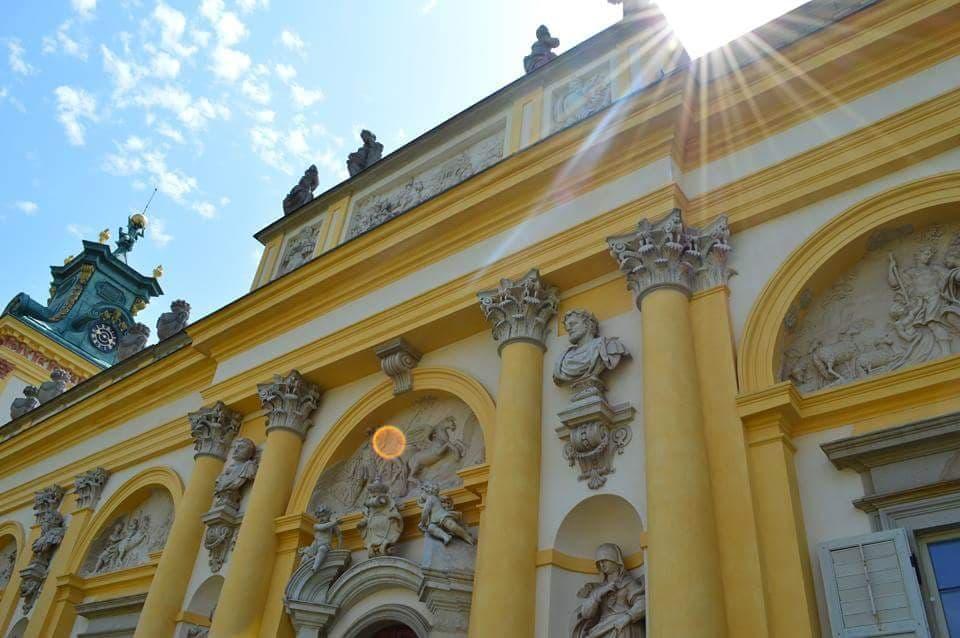
On Saturday, September 5, the garden paths of the Museum of King John III's Palace in Wilanów filled with relay teams. This was the 31st edition of Bieg po Nowe Życie, the New Life Run, one of Poland's largest initiatives promoting transplant medicine, marking fifteen years of the whole series this year. The first edition took place fifteen years ago at the Gołębiewski Hotel in Wisła, and since then the event has regularly returned to the gardens of the Wilanów palace too, which have already hosted its 21st, 25th and 28th editions among others.
The format has stayed the same for years. Participants form four person relay teams, and each team member covers a symbolic distance of one kilometre by nordic walking. Marching side by side are transplant recipients, transplant doctors, well known figures from culture and media, and students from Warsaw schools. Every kilometre covered is meant as a symbolic gesture of solidarity with transplant recipients and donor families.
The general who marched for the first time
Among this year's participants, one figure drew particular attention: Brigadier General Łukasz Andrzejewski-Popow, general advisor to the Chief of the General Staff of the Polish Armed Forces. Thirteen months earlier he had received a kidney transplant, with his brother Tomasz as the donor. This year he took part in one of the relay teams for the first time in his life. His story, personal as it is, fits the event's whole purpose: showing that transplantation is not a last resort but an effective treatment after which a person can return to full activity, sport included.
For Wilanów, the New Life Run has for years been more than a one off event. The Museum of King John III's Palace regularly lends its gardens to events with a social and charitable character, alongside its own rich cultural and historical programme. This year's scale, measured against the dozens of relay teams the past editions held here have drawn, confirms that the event has become a fixed part of the district's calendar, even though its reach and message are national rather than purely local.
The very idea behind the format, a march rather than a timed race, means people in very different physical condition can take part, including patients still recovering full fitness after their procedure. That matters, since the group of participants keeps growing every year, and organisers stress that what counts here is the gesture of solidarity, not the sporting result. For Wilanów residents, who already visit the palace gardens often enough in September for other cultural events, Saturday's march was a chance to come across something quite different from a concert or a crafts festival: a meeting with people for whom being on that route means far more than a walk in the park.