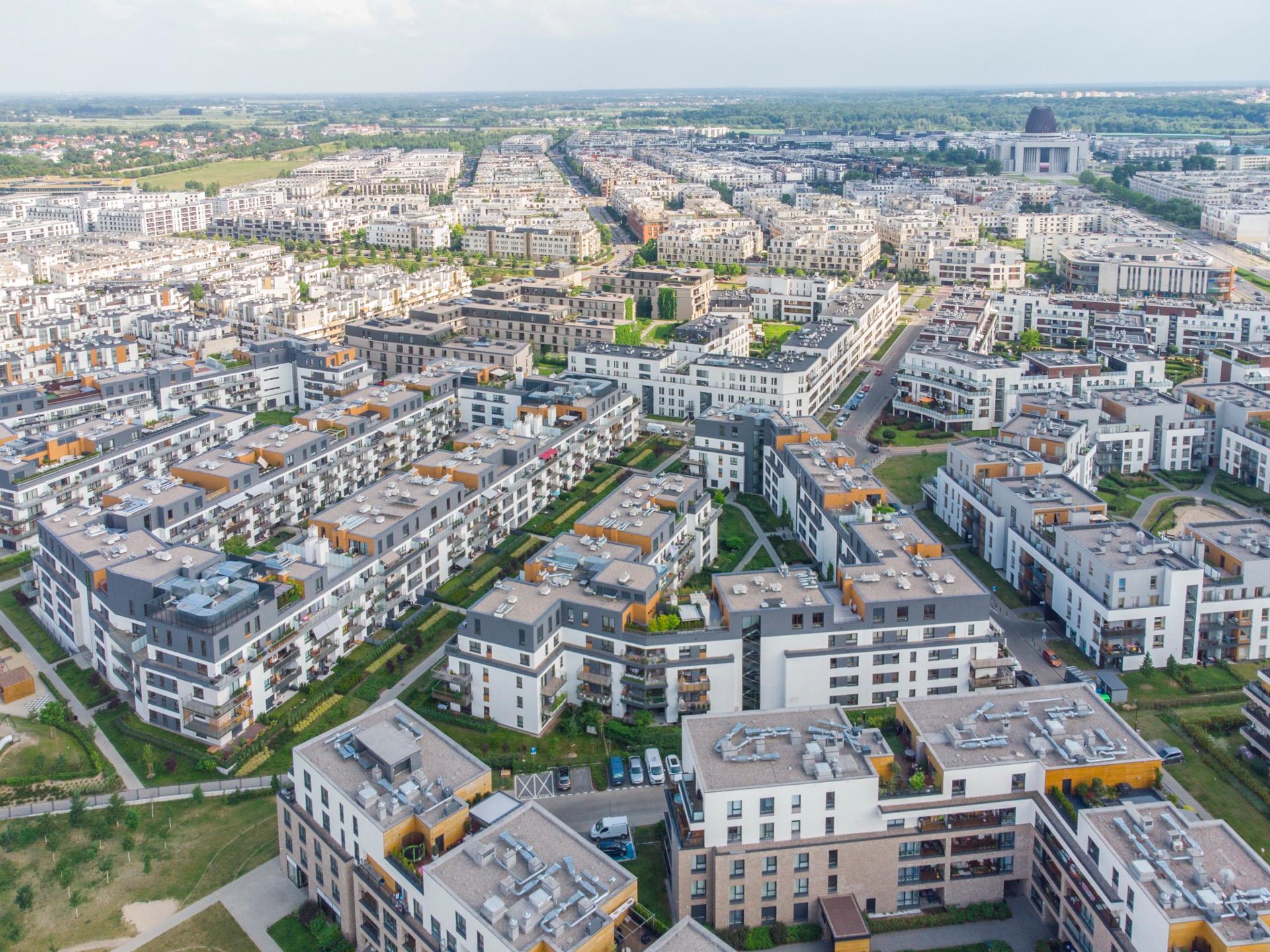
Wilanów is one of the fastest growing districts of Warsaw, a place where an old royal residence sits next to some of the newest housing developments in the capital. In 2010 around 17,000 people lived here, today there are close to 45,000. That growth shows at every turn: new estates, new schools, an ever denser network of local services. We write more about what this change means for flat prices in our article about the district's population growth.
People move here for simple reasons: plenty of greenery, an intimate character despite being close to the centre, a good offer of schools and kindergartens, and new, well designed flats. The historic heart of the district is the baroque Wilanów Palace, the summer residence of King John III Sobieski from the end of the 17th century, which gave the whole area its name.
Where is Wilanów?
Wilanów lies in the southern part of Warsaw, on the left bank of the Vistula, a dozen or so kilometres from the strict city centre. It borders Mokotów to the north, Ursynów to the west, and the Konstancin-Jeziorna municipality to the south; its eastern boundary is marked by the Vistula. This location explains its dual character: the northern part, with Miasteczko Wilanów, is urban and densely built, while the south, towards Powsin and Kępa Zawadowska, becomes increasingly green and suburban. Wilanów does not have its own metro station, so you get to the centre by bus and by car, mainly along Przyczółkowa and Sobieskiego streets and Wilanowska avenue.
What neighbourhoods does Wilanów have?
Wilanów is made up of seven clearly distinct parts, from the densely built Miasteczko Wilanów to the green, almost rural Powsin and Kępa Zawadowska. Each has a different character, type of housing and typical buyer. The table below brings them together in one place; the names match the neighbourhood filter in our listings, so each row takes you straight to the offers from that part of the district.
Scroll the table sideways to see all columns →
| Neighbourhood | Character | Who it suits / housing type |
|---|
| Miasteczko Wilanów | The most densely built and demographically youngest part of the district, with a shopping centre, schools and offices within walking distance. | Families with children; new multi-family developments (apartment blocks). |
| Wilanów Królewski | The historic heart of the district around the Wilanów Palace, with a heritage character and a prestigious address. | Those who value prestige and the palace surroundings; mixed development, including low rise and residential. |
| Wilanów Wysoki | A quieter, more intimate part west of Miasteczko. | Those looking for quiet close to the district centre; single family and lower multi-family housing. |
| Błonia Wilanowskie | A growing area of newer residential development, a natural extension of Miasteczko. | Buyers of new flats; multi-family development. |
| Zawady | A green, less dense part in the south, closer to the Vistula and open land. | Those who value space and greenery; mostly single family housing. |
| Powsin | The most suburban, rural in character edge of the district, home to the Botanical Garden and the Culture Park. | Those looking for a house with a garden and contact with nature; single family housing. |
| Kępa Zawadowska | The riverside, most recreational and green part of the district. | Those who value being close to the Vistula and low density housing; single family homes. |
How much does a flat in Wilanów cost?
Flat prices in Wilanów are among the higher ones in Warsaw, and the most current picture comes from real, moderated offers on our site, not averaged market reports. Three things push the price level at once: relatively young, well maintained buildings, strong and steady demand from families, and a limited number of new plots for development. Differences can be large even within the district itself: new apartments in Miasteczko Wilanów follow a different logic than single family houses in Zawady or Powsin. Instead of quoting one number, we point you to the source of real, current rates, meaning current listings from Wilanów.
Why this site exists
mieszkaniawilanow.pl was built because a district this size deserves its own place online, run by someone who actually lives here, not by a nationwide portal that treats Wilanów as one of a thousand search filters. We collect listings from the district and write about it specifically: about prices, neighbourhoods and everyday life.
We are not just another listings portal. We are from here.
Common questions about Wilanów
How many residents does Wilanów have?
Wilanów has close to 45,000 residents today. In 2010 it had around 17,000, which means growth of more than 160 percent, making Wilanów one of the fastest growing districts of Warsaw.
Is Wilanów a good place for families with children?
Yes. Wilanów, and Miasteczko Wilanów in particular, is one of the demographically youngest parts of Warsaw, with a dense network of schools, kindergartens, playgrounds and green spaces. The natural price of that popularity is often queues for public kindergartens and traffic at rush hour.
How do you get to central Warsaw from Wilanów?
Wilanów does not have its own metro station. You can reach the centre by city bus or by car, mainly along Przyczółkowa and Sobieskiego streets and Wilanowska avenue towards Mokotów. At rush hour the commute can take a while, because the road network was built for a much smaller district.
Where is Wilanów?
Wilanów lies in the southern part of Warsaw, on the left bank of the Vistula, a dozen or so kilometres from the strict city centre. It borders Mokotów to the north and Ursynów to the west, and its eastern boundary is marked by the Vistula.
What's worth seeing in Wilanów?
The best known landmark is the baroque Wilanów Palace with its gardens and museum, the summer residence of King John III Sobieski. Also worth seeing are the Temple of Divine Providence, Lake Wilanowskie, and the Botanical Garden and Culture Park in Powsin.
Looking for a flat in Wilanów?Browse current listings from the district.
See listings →